Common workplace injuries, and the First Aid and safety training that prevents them
The five most common workplace injuries in Australia, how to avoid each one, and the White Card, heights and First Aid training that helps.
Written byEdway
The short answer
Most workplace injuries that need time off come from five causes: lifting and handling, falls and trips, mental stress, repetitive strain, and falling objects. The right training, the right gear and a tidy workplace prevent most of them.
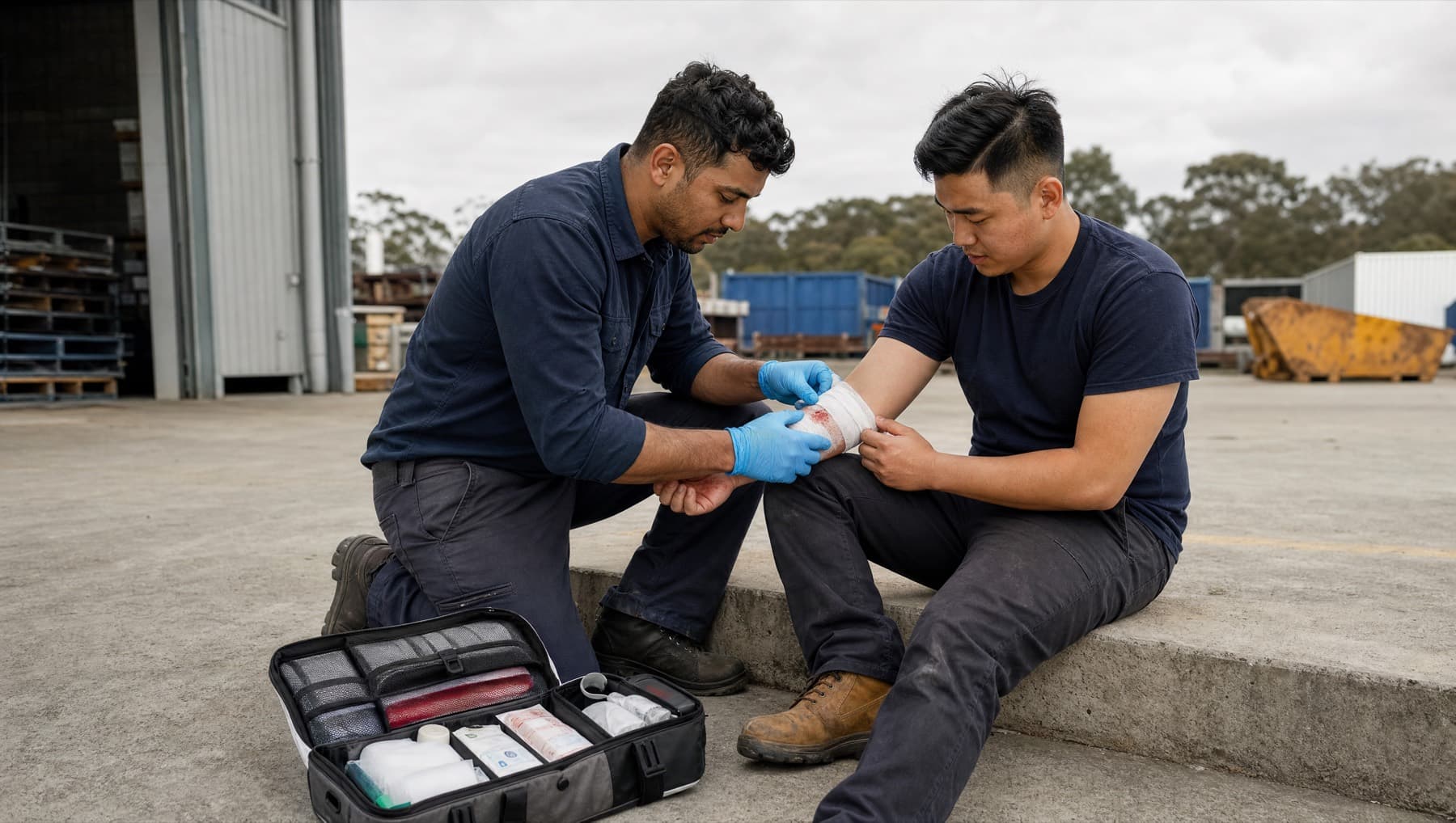
When an injury does happen, a trained first aider makes all the difference. That is why so many workplaces ask staff to hold a First Aid certificate.
Muscular stress from lifting and handling
This is the most common workplace injury in Australia. It happens when you lift, carry, push or pull something the wrong way.
Muscular stress can be avoided when staff have the right training and supervision. Plan the lift, get help with heavy or awkward loads, and use the equipment your site provides.
In construction, every worker must hold a White Card before they step on site. The White Card course teaches you to identify common construction hazards and apply risk control measures, so you know the safe way to work from day one.
Falls, slips and trips
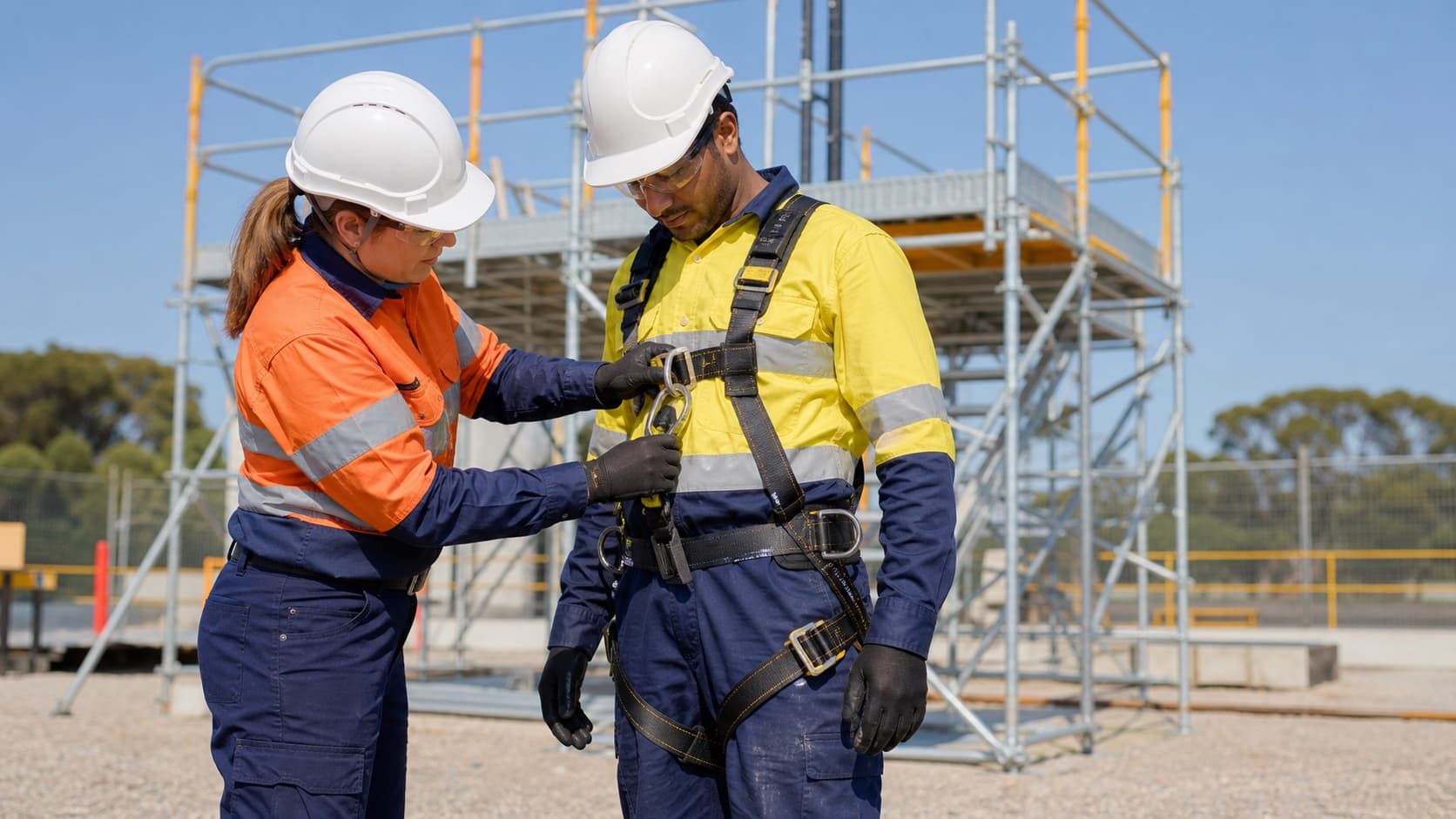
Nobody should work at heights without the proper training and safety equipment. And plenty of injuries happen at ground level, when someone simply trips over something.
Keep your work area tidy, with no cables, tools or offcuts left in walkways. Report a hazard the moment you see it.
The Working at Heights course is built for work where you could fall. It puts fall prevention first, then covers harnesses, lanyards, safe anchoring, fall-arrest systems and ladder safety. Read whether you need both a White Card and working at heights.
Mental stress at work
Overwork and issues like bullying cause mental stress, and it keeps people off work just like a physical injury does.
Regular breaks help. So do catch-ups with your manager, so no one feels weighed down or pressured by the people around them.
Speaking up is part of working safely. The White Card course covers your work health and safety duties and how safety reporting works on site, so you know how to raise a problem.
Repetitive strain from desks and repeated tasks
Even sitting at a desk can cause an injury. Workers report lower back pain and problems like carpal tunnel syndrome from badly set-up workstations.
Set up your chair, desk and screen to suit you. Take short breaks and change position through the day. Workstation checks pick up problems before they turn into injuries.
First aid belongs in every workplace. The First Aid course suits office, retail and hospitality staff too, so every workplace has someone ready to help.
Being hit by falling objects
Tools, materials and debris dropped from height cause serious injuries on site.
Wear the correct safety gear and follow your site's safety procedures at all times. Secure tools and materials when you work above others, and keep clear of areas where work is going on overhead.
The White Card course covers hazards like these. The Working at Heights course adds safe work at height and cleaning up the work area, so nothing is left to fall.
First Aid: be ready when an injury happens
Prevention comes first. But when someone is hurt, the first few minutes count.
HLTAID011 Provide First Aid is the certificate most workplaces ask for. You learn to respond to an emergency and give first aid until medical help arrives, including CPR, bleeding, burns, fractures and dislocations, head, chest and spinal injuries, choking, bites and stings, asthma and anaphylaxis. It runs in person in Sydney and Melbourne: 6 hours on the day, plus an online pre-study module you complete before you come.
Training Aid Australia (RTO 91411) issues First Aid and CPR. Edway Training (RTO 91401) issues Working at Heights in Sydney. White Card is issued by Training Aid Australia (RTO 91411) in New South Wales and by Edway Training (RTO 91401) in the other states we run it. The issuing RTO is shown on each course page before you book.
Already hold a current First Aid certificate? The CPR course is the short yearly refresh, 3 hours in person. Not sure which one you need? Read which first aid course to choose.
Next step
Book your First Aid course in Sydney or Melbourne. Heading onto a building site? Start with the White Card.
Sources
- Edway knowledge base — courses/first-aid/index.mdHLTAID011 unit, what the course covers, CPR included, issuing RTO Training Aid Australia (RTO 91411), 6 hours plus online pre-study
- Edway knowledge base — courses/first-aid/offerings.yamlFirst Aid runs in person in Sydney and Melbourne
- Edway knowledge base — courses/white-card/index.mdWhite Card covers WHS duties, hazard identification, risk control, safety communication and reporting
- Edway knowledge base — courses/working-at-heights/index.mdRIIWHS204E, fall prevention first, harnesses, anchoring, ladder safety, clean up the work area
- Edway knowledge base — courses/cpr/index.mdHLTAID009 CPR, 3 hours in person, issued by Training Aid Australia (RTO 91411)
- Released guide — guides/what-tickets-do-you-need-for-construction-work.mdWhite Card issuing RTO by state; Working at Heights issued by Edway Training (RTO 91401) in Sydney
- Safe Work Australia — Behind the numbers: what's causing harm at work (2025)body stressing (lifting and handling) is the most widespread mechanism of serious workplace injury claims — supports the guide's 'most common workplace injury' line