Do you need both a White Card and Working at Heights training?
How construction induction and working-at-heights training fit together, and when you need one or both to get on site and work safely.
Written byEdway
The short answer
If you work on a construction site and your job involves a fall risk, most sites will want you to hold both. A White Card covers construction induction. Working at Heights covers the task. Together they get you on site and up the ladder safely.
White Card is not a prerequisite for the Working at Heights course itself.
What each course does
| Course | Unit | What it covers |
|---|---|---|
| White Card | CPCWHS1001 | Basic construction health and safety induction |
| Working at Heights | RIIWHS204E | Identifying fall hazards, choosing controls and working safely at height |
Each course answers a different safety need, so they work best as a pair.
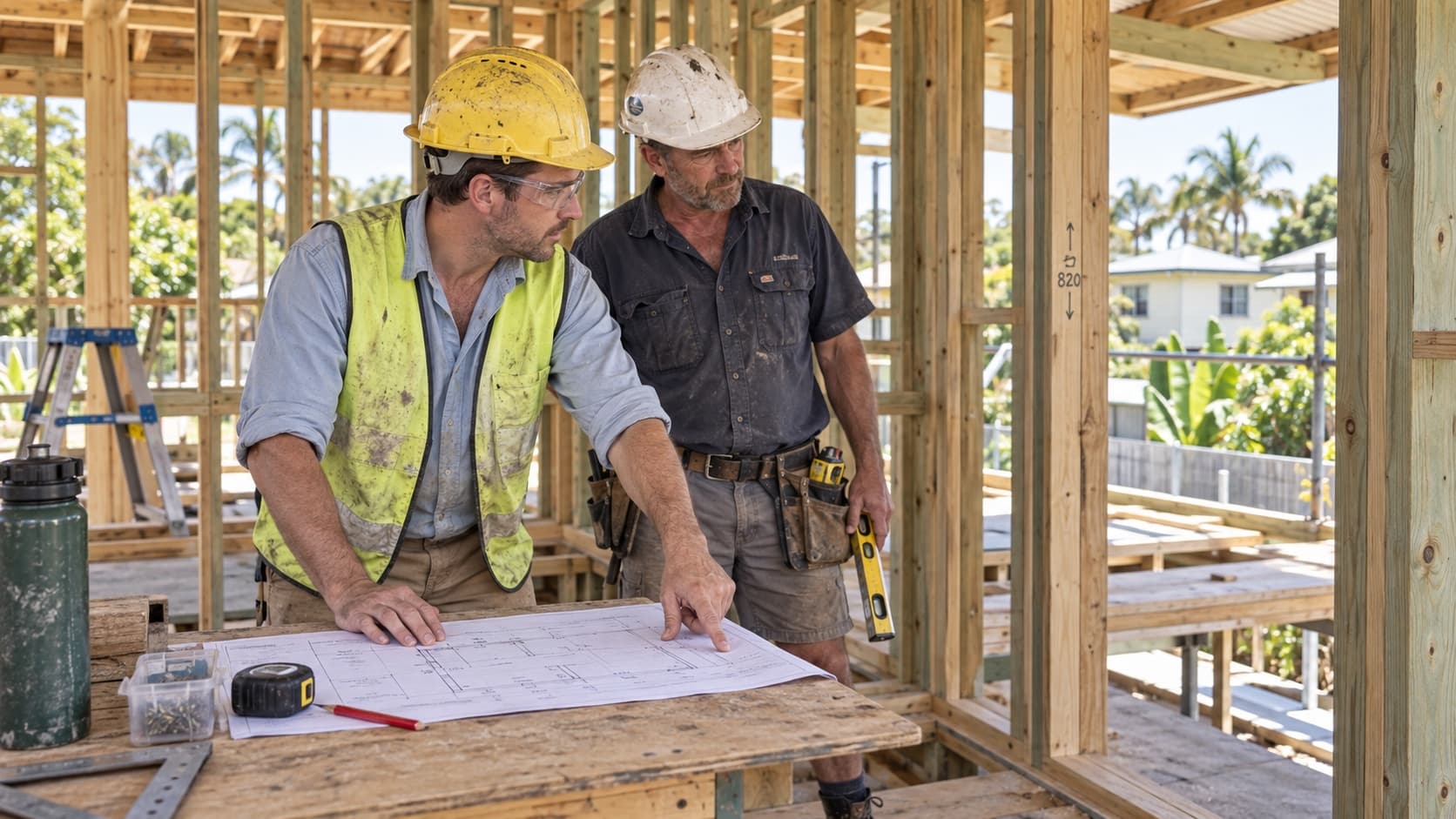
White Card is the induction you complete before working on any Australian construction site. It covers the core work health and safety knowledge you need to step on site safely.
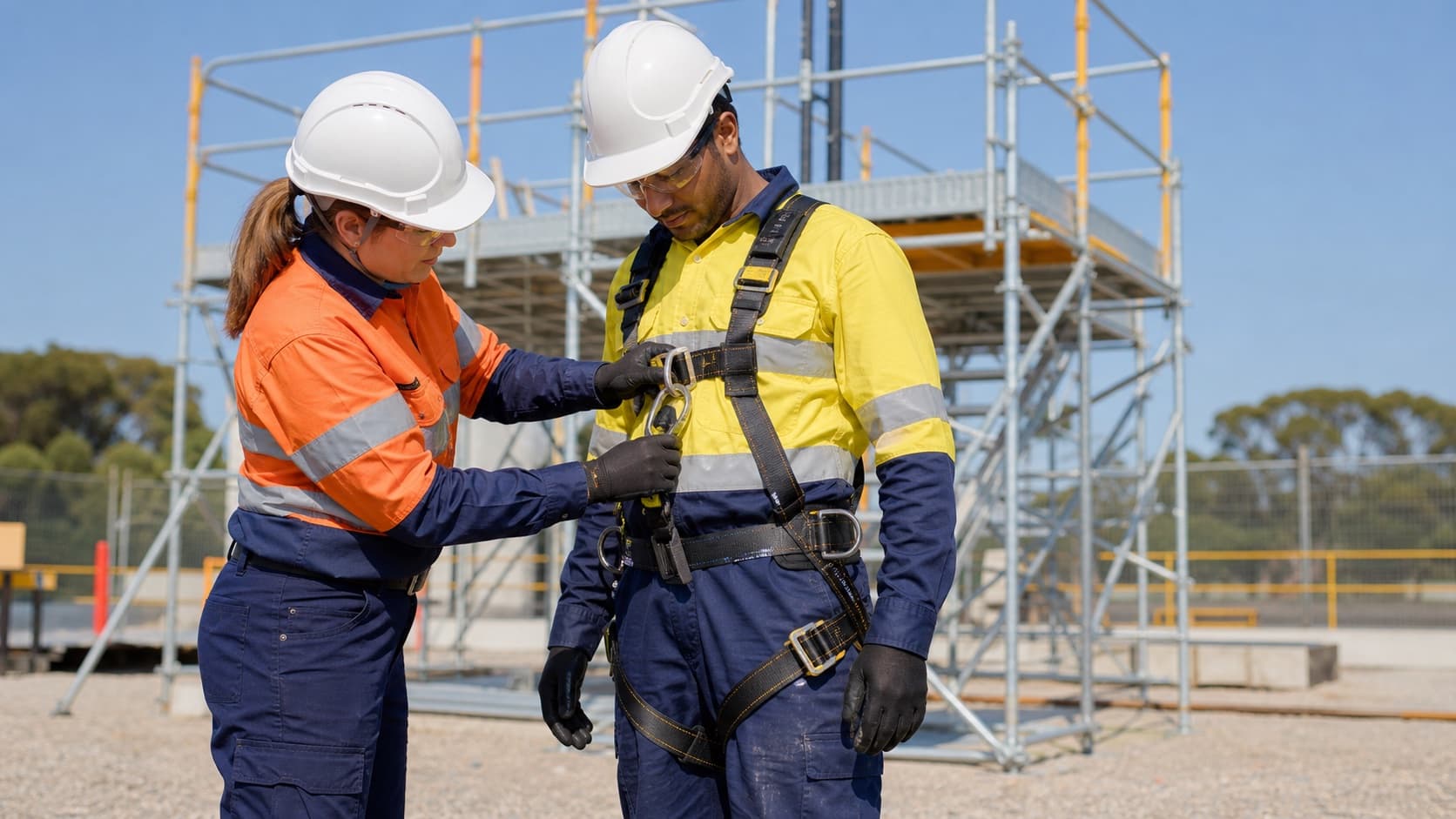
Working at Heights suits construction and building workers, roof repair and maintenance trades, warehouse and high-rise storage staff, and anyone working where a fall is possible. It puts fall prevention first, then covers fall-arrest equipment and systems.
When you need both
You need both when the work is construction work and the task exposes you to a fall risk. Think roof work, scaffold-related tasks and plant or structure maintenance.
The White Card gets you ready for construction work. Working at Heights gives you task-specific training for fall hazards and controls: risk assessment, harnesses, lanyards and straps, fall prevention, safe anchoring and ladder safety.
Your employer or site controller decides whether the role requires the heights unit. Many sites ask for this ticket before you start.
When one course is enough
A White Card on its own suits construction work with no working-at-heights task.
Working at Heights on its own suits a non-construction workplace. Warehouses, facilities and industrial sites can have fall risks without the work being construction work.
Your employer or site will tell you which tickets the job calls for, so you can book the right course first time.
No enrolment prerequisite
You do not need a White Card to enrol in RIIWHS204E. The Working at Heights course has no formal training prerequisite.
That does not remove a White Card requirement at a construction workplace. It simply means you can do the two courses in whichever order suits you.
What you receive
Each course has its own outcome. White Card training leads to the construction induction credential for the state where you train.
Working at Heights leads to a nationally recognised Statement of Attainment for RIIWHS204E. It is not a high risk work licence.
When a site asks for your heights ticket, this training is what they mean.
Next step
Start with White Card if you need construction induction. Choose Working at Heights when the job or site also requires fall-risk training. Pick the course that fits your job and get started. With the right training behind you, you can turn up ready for the job and focus on the work.
Sources
- Safe Work Australia — Construction work: Model Code of PracticeThe construction-induction role of White Card training
- Safe Work Australia — Managing the risk of falls at workplaces: Model Code of PracticeThe wider duty to manage fall risks at workplaces
- training.gov.au — CPCWHS1001 and RIIWHS204EThe nationally recognised unit titles and outcomes