Which first aid course do you need?
First Aid, CPR, Childcare or an advanced first aid course? Compare each, from CPR training Sydney to advanced first aid Melbourne.
Written byEdway
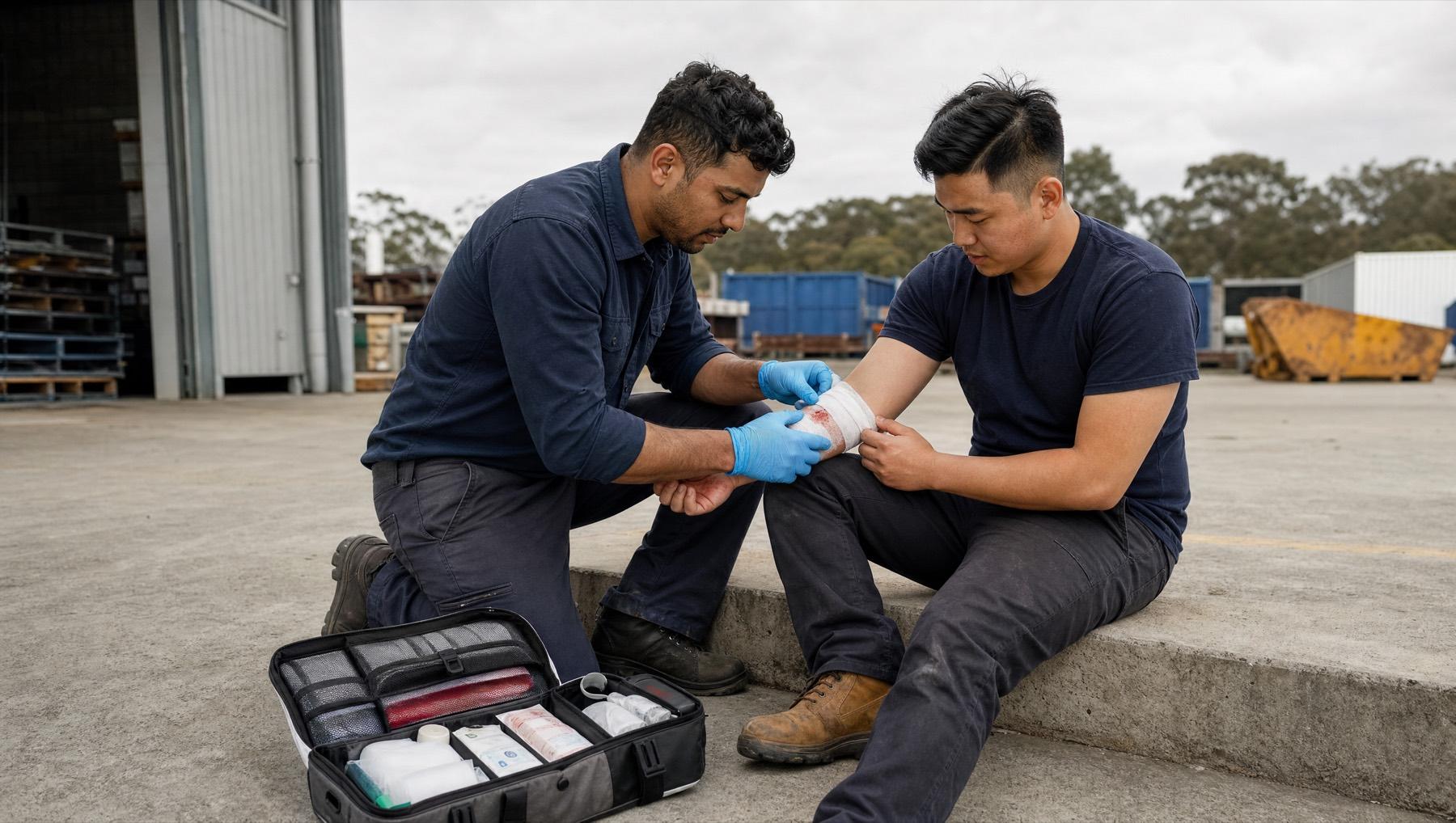
The short answer
Choose First Aid when a workplace asks for the usual first aid certificate. Choose CPR when only your annual CPR is due. Choose Childcare First Aid for an education or care setting.
Choose Advanced First Aid when you may need to lead a more complex response. Whichever you pick, you walk away with skills that can save a life at work, at home or out in the community.
Compare the 4 courses, up to an advanced first aid certificate
| Course | Unit | Choose it when | Includes |
|---|---|---|---|
| First Aid | HLTAID011 | A workplace asks for standard first aid | First aid, basic emergency life support and CPR |
| CPR | HLTAID009 | Only CPR needs refreshing | CPR only |
| Childcare First Aid | HLTAID012 | You work in education or care | Child and adult first aid, asthma, anaphylaxis and CPR |
| Advanced First Aid | HLTAID014 | You may lead a complex response | Advanced and standard first aid, plus CPR |
Got a unit code from your employer? Book the course with that code and you are sorted.
The usual workplace first aid training course
HLTAID011 Provide First Aid is what most workplaces mean by "a first aid certificate". It covers responding to an emergency, CPR and common injuries and illnesses until medical help arrives.
It includes HLTAID009 CPR, so you do not need to book a separate CPR course on the same day. It is a strong addition to any CV. Employers value staff who can step in calmly when someone is hurt, and it makes you the person your team can count on.
What does a workplace first aid officer do?
A workplace first aid officer is the person who steps in when someone is hurt or falls ill at work. They respond to the emergency, give first aid and CPR until medical help arrives, and pass on the incident details afterwards.
The First Aid course trains you for that role. It is the certificate most workplaces mean when they ask for a first aider.
Which occupations benefit from a first aid course?
Plenty of them. First aid training suits workplace first aiders, teachers, carers, trades, hospitality, fitness and retail staff.
If you work with children, Childcare First Aid is the one built for you. For everyone else, the standard first aid course covers what a workplace usually asks for, and it is just as useful at home and in your community.
CPR training is the yearly refresh
HLTAID009 Provide Cardiopulmonary Resuscitation is the shorter course for CPR only. Choose it when your full first aid is current and your workplace wants CPR refreshed. It is a quick way to keep your skills sharp and your record up to date.
How does CPR training help your workplace?
It puts people on the team who know what to do. CPR training teaches you to recognise an unconscious casualty, perform CPR, use the recovery position and respond to airway obstruction.
When more of your team keep their CPR current, more people are ready to help. CPR classes run in Sydney, and it is the shorter course, so the refresh is easy to fit in.
Childcare First Aid adds care needs
HLTAID012 Provide First Aid in an Education and Care Setting is for educators and support staff. It includes first aid for infants and children, asthma, anaphylaxis and CPR.
It is the ACECQA-approved qualification for education and care services. A standard HLTAID011 certificate does not cover the education-and-care requirement on its own. If you work in education and care, this is the course that has you covered.
Advanced first aid training leads the response
HLTAID014 Provide Advanced First Aid is for someone who may need to lead a complex or prolonged first aid response. It builds on standard first aid and adds the skills to coordinate other first aiders and equipment until medical help arrives.
It includes the standard first aid and CPR units. You do not need to hold HLTAID011 before enrolling, although prior experience can help. It is a great next step if you are already the go-to first aider at work.
What do you learn in an advanced first aid course?
- respond to an emergency and perform CPR
- apply advanced first aid procedures
- coordinate the response and direct other first aiders until medical help arrives
- use equipment such as a defibrillator (AED), oxygen, stretchers, epi-pens and asthma puffers
- communicate what happened and review the incident afterwards
You complete a compulsory online pre-study module first, which takes 1 to 3 hours. Then you attend about 8 hours in person, including breaks. You need to be able to do 2 minutes of uninterrupted CPR on a manikin on the floor.
Who needs advanced first aid training?
Safe Work Australia's code of practice says advanced first aid training suits some high-risk workplaces. Where life-threatening injuries could happen and emergency services cannot get there quickly, someone trained in more advanced first aid will be needed.
The course suits incident and accident responders, site safety and security staff, child and aged carers, defence personnel, and any workplace that needs an advanced first aider.
Why do advanced first aid if your job doesn't need it?
Most of us have quietly wondered: what would I do if someone I love collapsed in front of me? A partner at the dinner table. A parent on a family visit. A child at the beach. A workmate on an ordinary afternoon.
It is a frightening thought, because emergencies never come with a warning. The worst feeling in the world is standing there, panicking, not knowing what to do while you wait for the ambulance, and wishing afterwards that you had.
Advanced first aid takes that fear and replaces it with a plan. You practise until the steps feel natural: check for danger, call for help, start CPR, use the defibrillator, and keep going. When something does go wrong, you are not the person frozen on the sidelines. You are the person who knows what to do, stays calm, and gives someone the best chance until help arrives.
You can't plan for the moment. You can be ready for it.
What are the benefits of an advanced first aid course?
Be the one who takes charge. When something serious happens, people freeze or wait for someone to lead. With advanced training, you know what to do, what to ask others to do, and how to keep the response going until the ambulance arrives.
Be ready for the people you love. Emergencies don't only happen at work. If a family member, a friend or a workmate collapses, stops breathing or has a severe allergic reaction, you have the skills and the confidence to step in, instead of living with the regret of not knowing how. Knowing you can help takes away a lot of the fear.
Use the equipment that saves lives. You practise with a defibrillator, oxygen, epi-pens and asthma puffers, so you are not seeing them for the first time in a real emergency.
One course, four units. Your Statement of Attainment covers advanced first aid plus the standard first aid, emergency life support and CPR units, so one booking covers the lot.
Can an advanced first aid certificate help your career?
Yes. Employers across a range of industries, including mining, construction, remote and outdoor work, see an advanced first aid certificate as a real plus. It shows you can do more than basic first aid: you can lead the response and direct other first aiders.
That makes you a more valuable member of the team, and the person your workplace counts on when it matters. A recognised step up like this can strengthen your case when you go for a promotion, a site role or a pay rise.
Where does advanced first aid training run?
Classes run in Sydney. In Melbourne, send us an enquiry from the Advanced First Aid course page.
Keep the training current
Statements of Attainment do not expire. Workplaces usually treat first aid as current for 3 years and CPR for 12 months.
The guide How long does a first aid certificate last? explains the difference.
Check that it is accredited
Edway also lists a non-accredited online first aid product. It gives you a Certificate of Completion, not HLTAID011. When an employer or regulator asks for a nationally recognised unit code, choose one of the accredited courses above.
All 4 accredited courses are delivered and issued by Training Aid Australia (RTO 91411).
Next step: a first aid CPR course Sydney or Melbourne
If no unit code was supplied, start with First Aid. Use CPR for a CPR-only refresh, or choose Childcare First Aid for an education or care role. Book your spot and get the skills that make a real difference.
Sources
- training.gov.au — HLTAID011, HLTAID009, HLTAID012 and HLTAID014Unit codes, official titles and superseded codes
- ACECQA — approved first aid, anaphylaxis and asthma trainingHLTAID012 being on the approved-qualifications register for education and care services (Education and Care Services National Regulations, regulation 136)
- Safe Work Australia — Model Code of Practice: First aid in the workplaceWorkplace first aid requirements sitting under work health and safety law, and advanced first aid training suiting some high-risk workplaces and places where emergency services cannot get there quickly