
Working at Heights: what the course covers
Your RIIWHS204E heights ticket: what you do on the day, what you take home, and when the shorter refresher is the right booking for you.
Written byEdway
The short answer
Working at Heights is 1 day of practical and theory training for work where a fall is possible. It covers planning the job, controlling fall risks and using height-safety equipment.
You receive a nationally recognised Statement of Attainment for RIIWHS204E Work safely at heights.
It is a hands-on day that gives you the confidence to work safely up high and a ticket employers recognise.
Who the course is for
The course suits construction workers, roofers, maintenance trades and other workers whose job exposes them to a fall risk. Employers and worksites may ask for the unit by its code, RIIWHS204E.
Warehouse and high-rise storage staff get a lot out of it too. If your job takes you up a ladder, onto a roof or along a raised platform, this is your course.
Working on a construction site as well? Pair it with a White Card. The 2 courses cover different duties, and together they make you site-ready.
The guide Do you need both a White Card and Working at Heights training? explains the difference.
What the course covers
You learn how to identify the work requirements, check the site and choose risk controls before starting. The course focuses on preventing a fall before it happens.
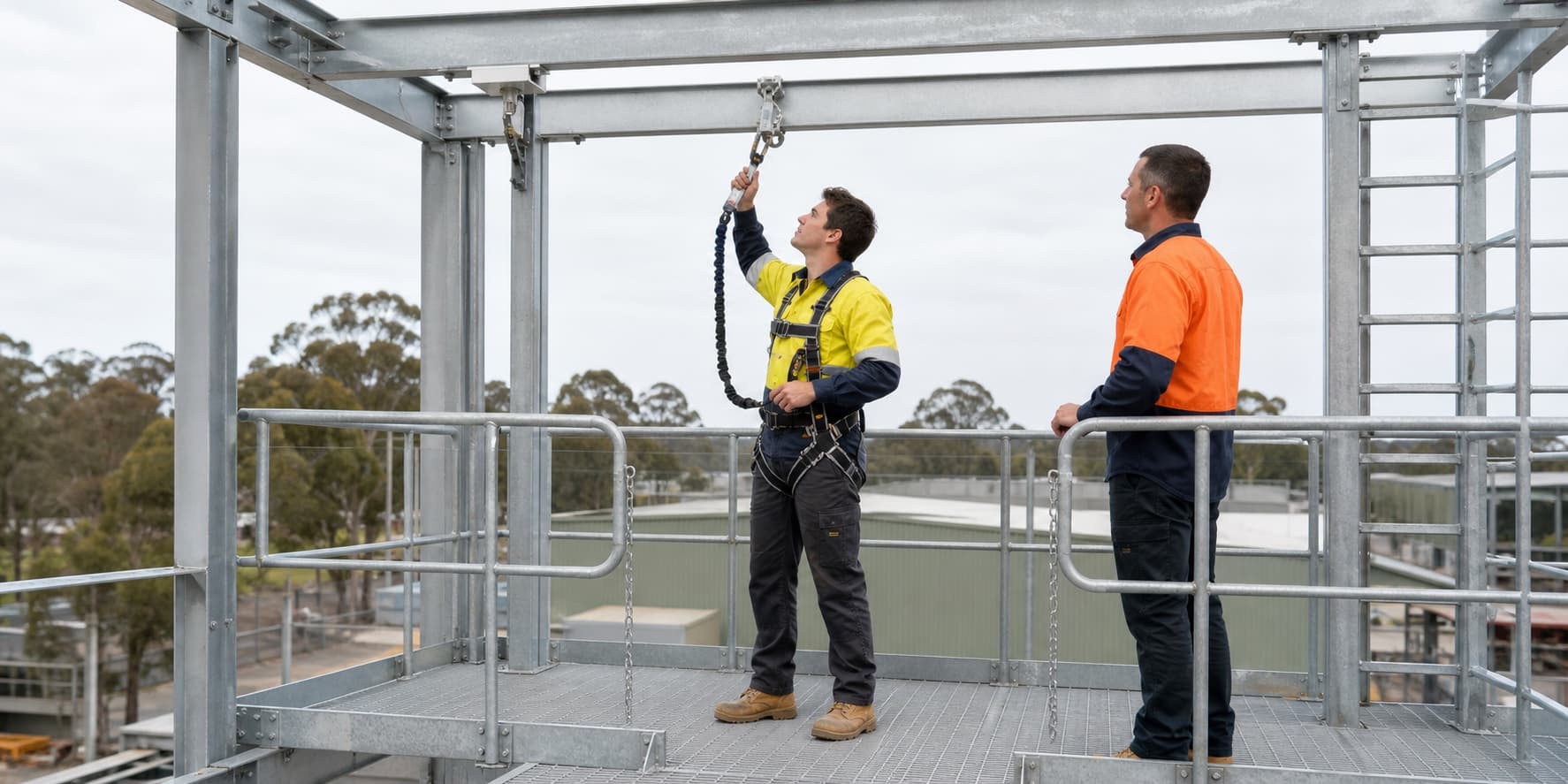
Practical activities include selecting and checking equipment, using harnesses and lanyards, working with anchor points, positioning yourself safely and using ladders correctly.
You also cover the procedures for finishing the job, checking equipment and leaving the work area safe. By the end of the day you know how to plan, do and wrap up a job at height the safe way.
How the training runs
The full course runs for 8 hours in person at Seven Hills, New South Wales. It includes theory, practical activities and assessment.
There is no earlier unit you must hold. You do need to be physically able to complete the practical tasks. Bring government-issued photo identification, your USI and steel-cap boots.
Your trainer walks you through every step, and you practise with the gear yourself, so you leave ready to use it on the job.
What you receive
Edway Training (RTO 91401) issues a nationally recognised Statement of Attainment for RIIWHS204E. It is accepted in every state and territory.
Working at Heights is not a high risk work licence class. There is no separate state licence or card to obtain.
The Statement of Attainment does not expire. It travels with you from job to job, wherever in Australia the work takes you.
When to choose the refresher
Choose the full course if you have never completed RIIWHS204E. The refresher is only for someone who already holds the unit and can provide the existing qualification as evidence.
The refresher runs for 4 hours at Seven Hills and revisits the practical skills. There is no regulated refresher interval. It is a great way to sharpen your skills when your employer or site asks for recent training.
Next step
If this is your first time, see the Working at Heights course page.
If you already hold RIIWHS204E, check the Working at Heights Refresher and your workplace’s currency requirement.
Sources
- training.gov.au — RIIWHS204E Work safely at heightsUnit code, official title, and the supersession of RIIWHS204D
- Safe Work Australia — High risk work licence classesWorking at heights not being a high risk work licence class, and the classes that are
- Safe Work Australia — Model Code of Practice: Managing the risk of falls at workplacesThe duty on a business to provide information, training and instruction for fall-risk work
- Solar Accreditation Australia — Accreditation pathwaysRIIWHS204E being accepted for initial solar installer accreditation