What do you learn in a responsible service of alcohol course?
Provide Responsible Service of Alcohol SITHFAB021: liquor laws, refusing service, ID checks and intoxication for RSA NSW and VIC.
Written byEdway
The short answer
RSA training teaches you to sell, serve and supply alcohol responsibly. You learn the liquor laws that apply to you, how to refuse service, how to deal with under-age patrons, and how to reduce alcohol-related harm.
The unit is SITHFAB021 Provide responsible service of alcohol.
Completing the RSA course gives hospitality workers practical skills they can use immediately on the job. Whether you're just starting a career in hospitality or heading back behind the bar, it sets you up to serve with confidence.
What the RSA course covers
In New South Wales, the self-paced online course is split into these parts:
- Introduction.
- Module 1: New South Wales liquor laws.
- Module 2: Intoxication.
- Module 3: Minors.
- Module 4: Harm minimisation strategies and approaches.
- Module 5: Compliance and enforcement.
- Final assessment.
You work through them in order. You cannot skip ahead.
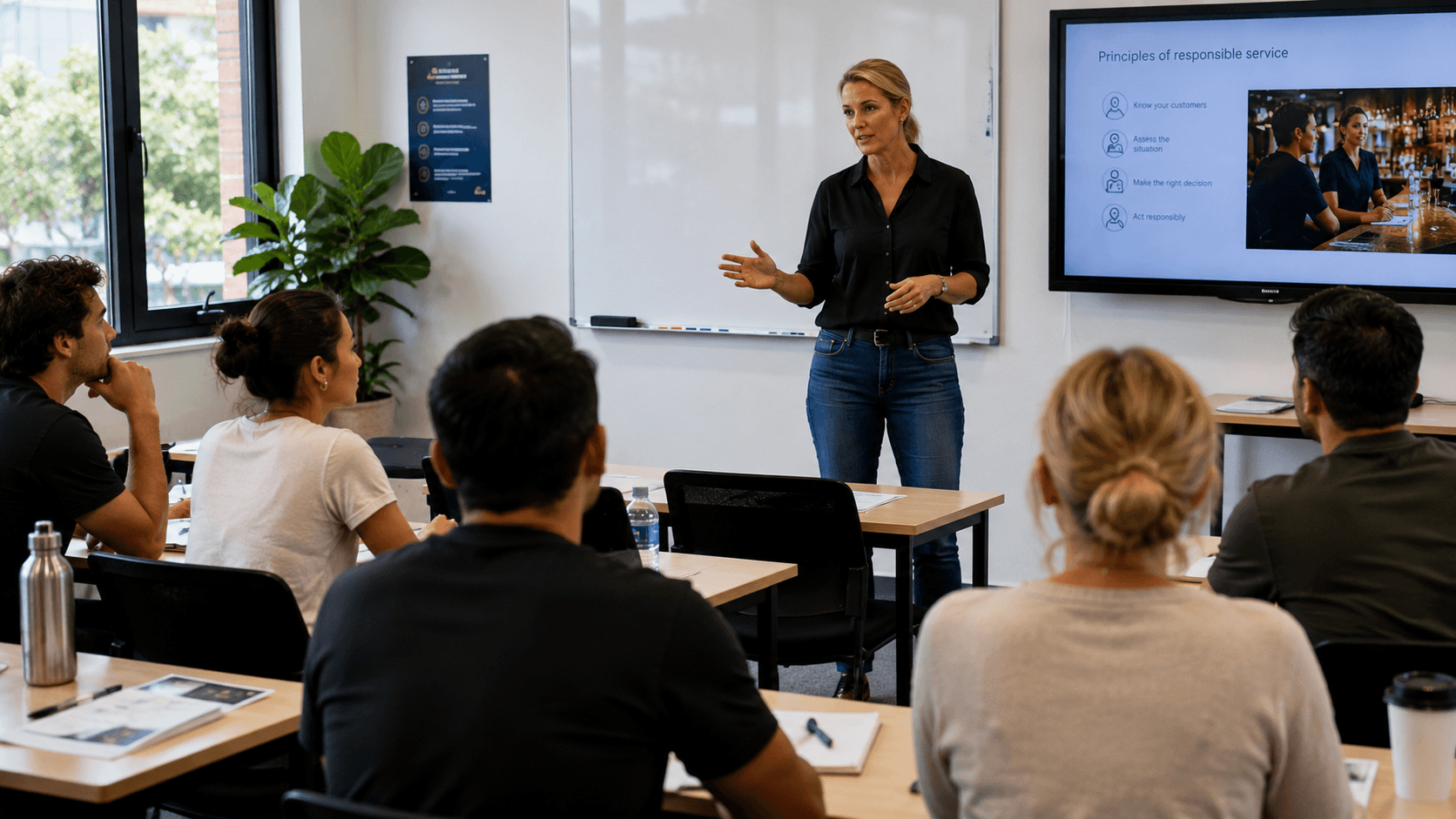
The New South Wales classroom course covers the same unit in one day of 6 to 7 hours. Self-paced online study takes about 6 hours, and you have 2 months from your confirmation email to finish.
Pick the classroom if you like a trainer in the room and your questions answered on the spot. Pick online if you prefer learning on your own time and at your own pace.
Refusing service, the heart of responsible service of alcohol training
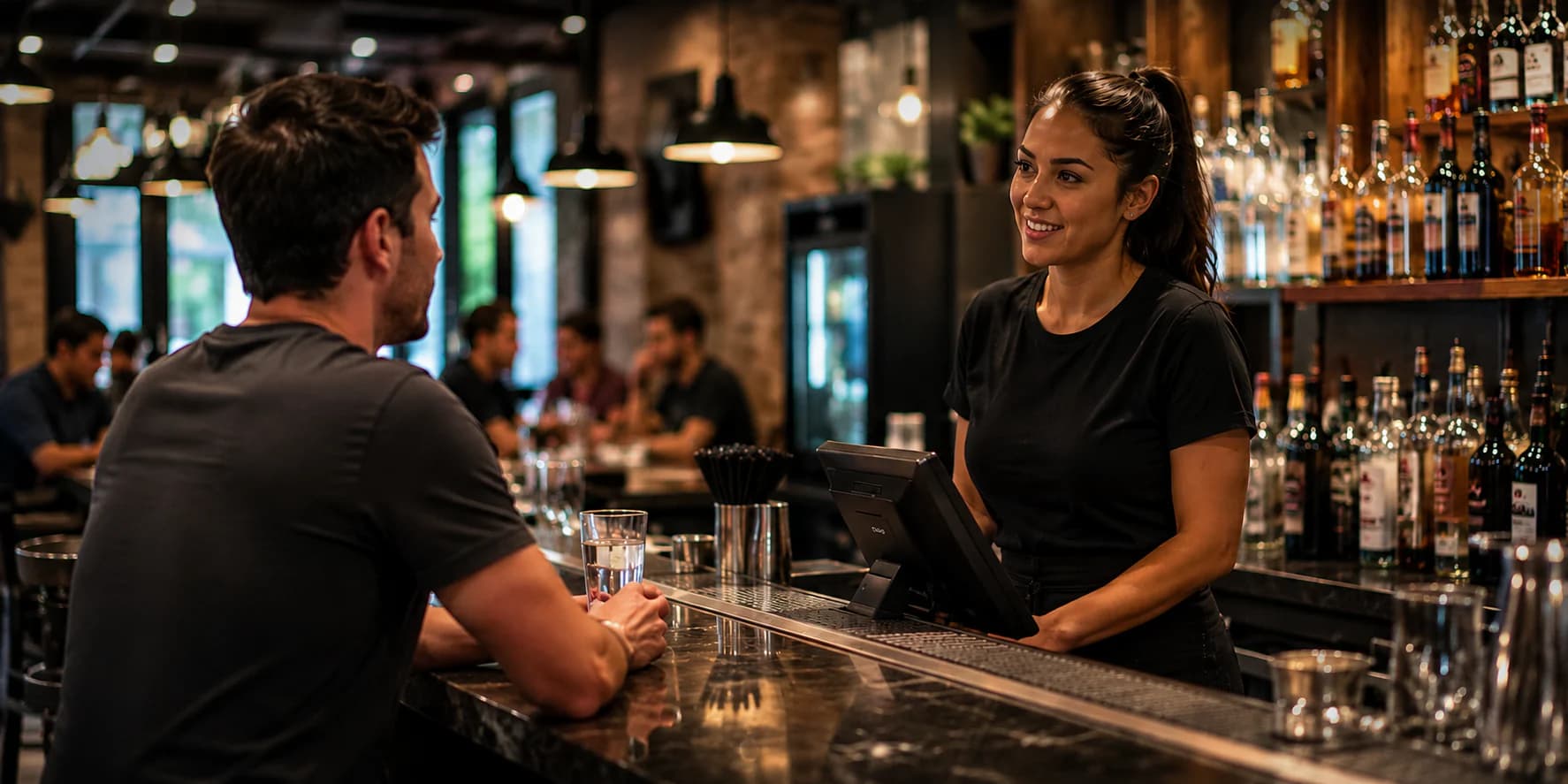
A large part of the course is about when you must refuse service and how to do it. You learn to recognise patrons who should not be served, including people who are intoxicated or under age.
You also learn how to refuse service and what your responsibilities are when you do. The licensee has responsibilities too, and the course covers both.
The course shows you how to approach these conversations with empathy and professionalism. That means handling difficult patrons with calm and authority, and keeping the night safe for everyone.
What you say does not need to be complicated. A brief, respectful explanation is enough. Skip any debate about whether the customer is intoxicated, because that conversation raises tension instead of resolving it. If a colleague is involved, everyone delivers the same message, so the decision never depends on who happens to be behind the bar.
Refusing service is one stage of the process. Afterwards, you:
- stop serving the patron alcohol straight away
- tell the duty manager or supervisor
- keep observing the patron
- help arrange safe transport home
- complete the venue's incident records
Accurate records show that you and the venue acted responsibly if questions come up later.
Standard drinks
Standard drinks sit naturally alongside the intoxication and harm-minimisation modules. Those modules teach you to keep an eye on how much a patron has had and to help them drink in moderation.
A standard drink measures the pure alcohol in a drink, whatever its type or size. A pint of beer and a small glass of wine look different, and the glass alone does not tell you which holds more alcohol. Glass size, alcohol percentage and drink type all change the answer.
That is why a serving and a standard drink are different things. A serving is the amount you pour. A standard drink measures the alcohol inside it. One serving can hold less than one standard drink, exactly one, or several.
The label on a can, bottle or cask is your quickest guide. Look for:
- the number of standard drinks in the container
- the alcohol by volume (ABV)
- the size of the container
- whether the figure covers the whole container or a single serving
For the serving sizes your venue uses, your licensee can walk you through the house pours on your first shift.
How do mocktails help with RSA in NSW?
A good alcohol-free drink is harm minimisation in action. The intoxication and harm-minimisation modules teach you to keep an eye on how much a patron has had and to help them drink in moderation.
Offering water, a mocktail or another non-alcoholic option between rounds is one of the easiest ways to do that. The designated driver gets something worth ordering, the night stays safe, and your patrons head home happy.
RSA Training Sydney: checking ID and under-age drinking
The minors module covers under-age patrons. You learn to recognise patrons who may be under age and to refuse them service.
You also learn the rule for your own age. You must be 18 or older to sell, serve or supply alcohol.
If you train in Sydney, you can do the classroom course in a single day or study online from home. Either way, you finish ready to check ID with confidence at the door or the bar.
Signs of intoxication and duty of care
The intoxication module teaches you to recognise when a patron has had too much. You then learn what to do about it, including refusing further service.
Alcohol affects people differently, so you assess behaviour rather than count drinks. Look for a combination of signs rather than one on its own:
- slurred or slowed speech
- difficulty keeping balance
- delayed reactions or poor coordination
- aggressive, emotional or inappropriate behaviour
- trouble concentrating or following a conversation
- glassy eyes or reduced awareness of surroundings
Judging by what you observe, rather than by assumptions, keeps your decisions fair and consistent.
The harm-minimisation module covers practical ways venues reduce harm. The compliance module explains how the rules are enforced and what that means for staff and licensees.
The topics covered in RSA training will make you more comfortable in difficult situations involving alcohol at work and help you make the best possible decisions about serving customers. Together, these skills help workers maintain a safe and enjoyable environment.
What skills do you gain from responsible service of alcohol training?
Practical ones you use from your very first shift. You learn to spot trouble before it escalates, to notice when a patron has had too much, and to step in early.
You also learn how to talk to people. Refusing service, checking ID and calming a difficult patron all go better with empathy, a steady voice and the liquor laws clear in your head. Employers notice that confidence.
Taking your RSA training course skills home
The RSA rules apply to licensed venues and events. Your skills come home with you too.
Noticing when someone has had too much, offering water or a non-alcoholic drink, and helping a friend get home safely all draw on the same ideas. Hosting a backyard barbecue? Make sure there is plenty of food and water on hand, and keep light beer and alcohol-free options in the esky.
Why RSA certification is mandatory
The law requires RSA training for anyone who sells, serves or supplies alcohol in a licensed venue. In New South Wales the regulator is Liquor & Gaming NSW. In Victoria it is Liquor Control Victoria.
In Victoria, the Edway course is online only. Liquor Control Victoria also requires a Learning Hub module called "Sexual Harassment and Assault: Recognise, Prevent and Respond".
In both states, Edway Training (RTO 91401) delivers the course and issues your Statement of Attainment. What you receive afterwards differs by state. The guide to the RSA certificate explains the difference.
Holding your RSA shows employers you're ready to promote safety and uphold the venue's legal responsibilities. It's your ticket to work behind the bar, on the floor or at events, and we're here to help you get it done.
Next step
Choose your state on the RSA course page to see the study options, dates and the price. Book today and take the first step toward a responsible and successful hospitality career.
Sources
- Liquor & Gaming NSW — training requirements for liquor and gamingWho must hold an RSA in New South Wales and the competency-card requirement
- Victorian Government — RSA training (Liquor Control Victoria)Victorian online-only delivery, the Certificate of Completion and the Learning Hub steps
- training.gov.au — SITHFAB021Unit code and official title