How to protect your kids from winter flu, and be ready if they get sick
A parent's plain guide to the winter flu: simple ways to lower the risk at home, and how childcare first aid gets you ready if your child gets sick.
Written byEdway
The short answer
Keep hands clean, keep your kids away from people who are sick, and ask your GP about the flu shot. Then get ready for the day your child does get sick. A childcare first aid course teaches you the signs to watch for and what to do in an emergency, so you can act calmly instead of guessing.
It's that time of the year when sniffles are a trend and the winter flu can really hit hard. It is certainly something you want to avoid, and children seem to catch everything going around this season. That is why it pays to be prepared.
What the winter flu is
The flu comes from the influenza virus, which becomes more active during winter. It isn't caused by the cold weather itself. It spreads easily when you come in contact with someone who has it.
For anything about your child's health, your GP is the person to ask.
How to lower the risk at home
A few simple habits make a real difference this winter.
- Wash hands often. Make sure to always wash your hands when you are around someone who is sick, and teach your kids to do the same.
- Keep your distance from people who are sick. One sure-fire way to avoid the flu virus is to minimise contact with someone who is sick. If a friend or relative is unwell, a visit can wait until they are better.
- Ask your GP about the flu shot. Your GP can tell you whether the flu shot suits your child and the rest of the family.
These habits help the whole household, not just the kids. Grandparents and other carers benefit from them too.
Why a childcare first aid course helps
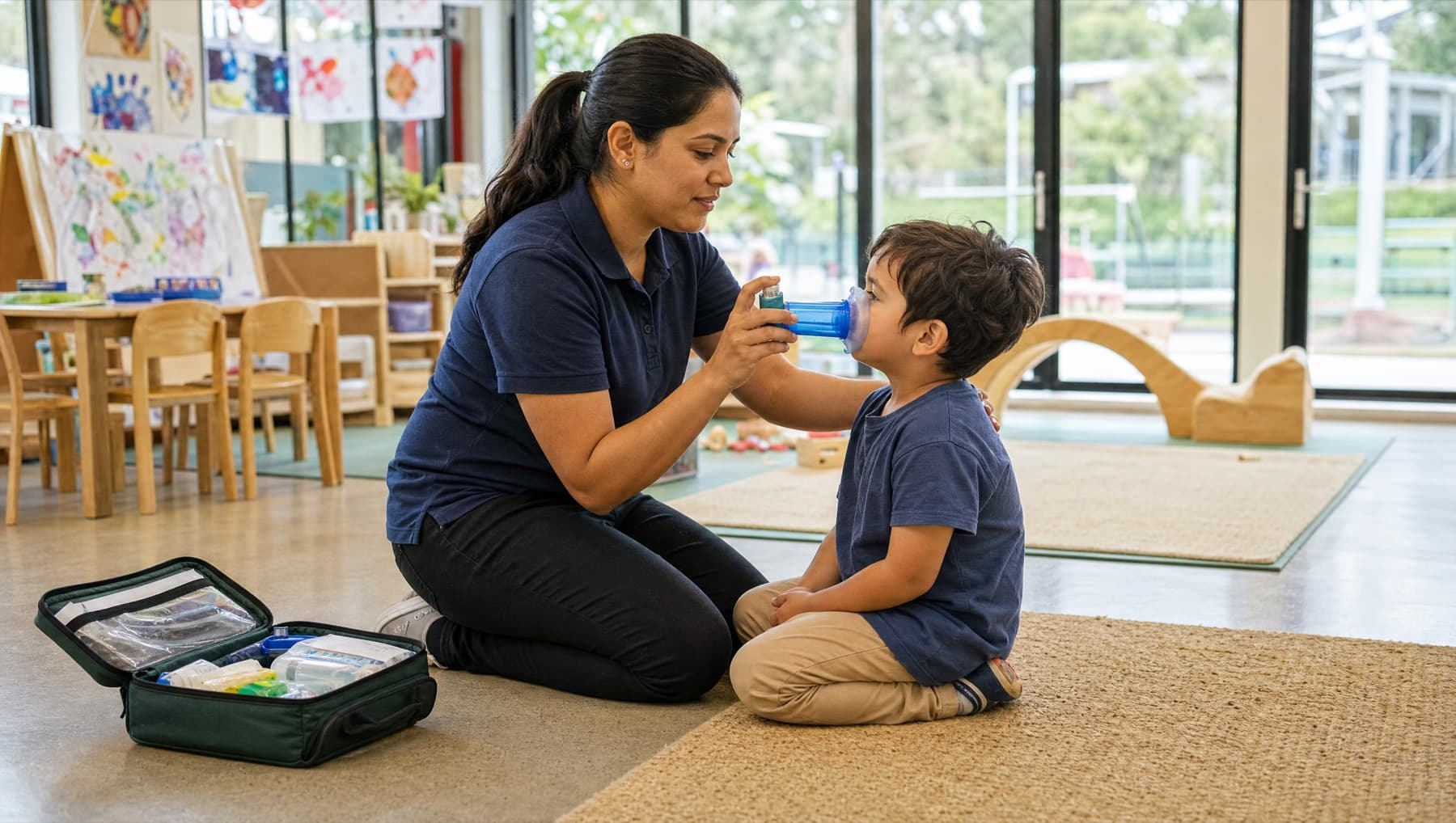
As a parent, you must be prepared for instances when your child gets sick. It is hard to know what is normal and what needs action when your child is unwell and upset in front of you. A childcare first aid course teaches you the signs, so the right steps come quickly when it counts.
The course is HLTAID012 Provide First Aid in an Education and Care Setting. It is built for people who look after children, and it suits parents too. You learn to:
- respond to an emergency with children present
- give CPR, including to infants and children
- manage asthma and anaphylaxis emergencies
- apply first aid procedures
- communicate about the incident and review it afterwards
The training is hands-on and practical. You practise on a manikin with a trainer, so you walk out knowing what to do, not just having read about it.
Training Aid Australia (RTO 91411) delivers this course and issues your Statement of Attainment.
The skills last well beyond winter too. You can use them at home, at the park or on holiday, all year round.
If you work in childcare or teach, the guide on whether teachers and childcare workers need childcare first aid explains how the course fits your job.
Next step
Book today and be ready this winter. To see dates and check the issuing RTO before you book, go to the Childcare First Aid course page.
Want first aid for adults at work instead? The first aid course is built for that, and the guide on which first aid course you need compares the options.
Sources
- Edway knowledge base — courses/childcare-first-aid/index.mdHLTAID012 unit code and title, what you learn (CPR for infants and children, asthma and anaphylaxis emergencies), who the course is for, issuing RTO
- Edway knowledge base — courses/first-aid/index.mdThe general first aid course as the alternative for adults at work