First aid for new parents: three ways to ease the worry
Options for new parents seeking information and support: parent education, a new parents' group and childcare first aid training.
Written byEdway
The short answer
Preparing for a baby can bring questions and uncertainty. Parent-education classes and parent groups are options for information and connection. A childcare first aid course teaches specific first-aid skills for babies and children.
Life with a newborn brings new questions, from feeding and sleeping to when to ask for help. Here are 3 practical ways to prepare and connect with support.
Prenatal classes
Some maternity services offer antenatal or parent-education classes, and some encourage a partner or support person to attend. The sessions can help you learn about childbirth and parenting. Ask your own service what it offers.
New parents' groups
Some child health clinics run groups for new parents. A group can be an opportunity to meet other parents and share questions and experiences. Ask your local child health clinic or maternity service whether it runs a group.
A childcare first aid course before the baby arrives
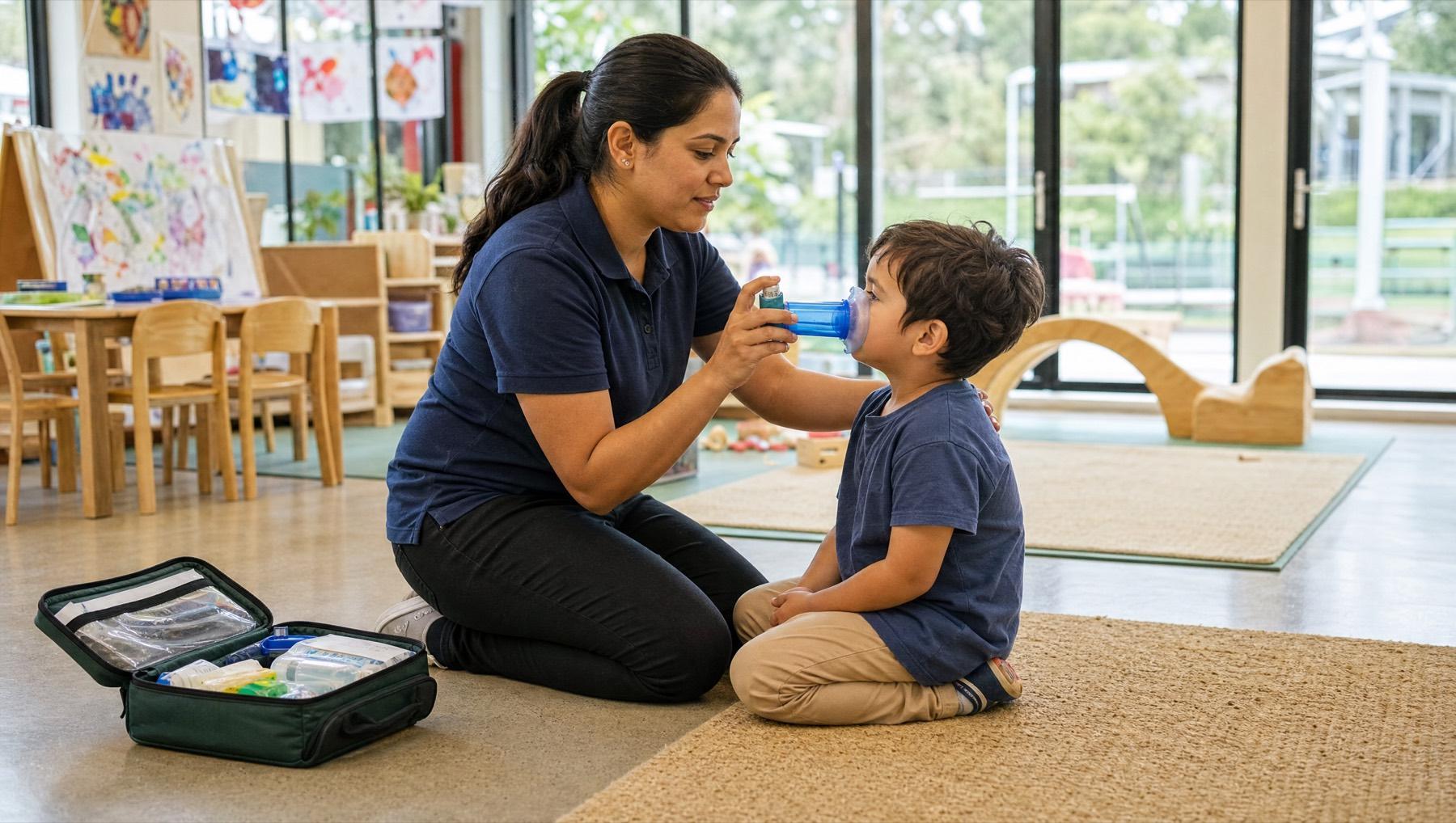
A childcare first aid course is one option for learning first-aid skills for babies and children. The course covers responding to emergencies, including CPR for infants and children, and managing asthma and anaphylaxis emergencies. The practical training gives you an opportunity to learn and practise those skills with a trainer.
For anything about your own baby's health, your GP, hospital or midwife is the right person to ask.
What the course covers
The childcare first aid course is HLTAID012 Provide First Aid in an Education and Care Setting. It is built for people who care for babies and young children, and it suits new parents too. You learn to:
- respond to an emergency
- give CPR, including to infants and children
- manage asthma and anaphylaxis emergencies
- apply first aid procedures
No experience is needed. The course is 8 hours in the classroom, including breaks, and there is an online module of 1 to 3 hours that you finish before your class. The training is hands-on, with a trainer in the room.
When you finish, your Statement of Attainment covers four units: HLTAID012, HLTAID011, HLTAID010 and HLTAID009. It is nationally recognised.
Training Aid Australia (RTO 91411) delivers this course and issues your Statement of Attainment.
If you would like more detail on what any first aid course teaches, read what a first aid course covers.
Next step
To see dates, check the issuing RTO and book, go to the Childcare First Aid course page. Want general first aid for adults as well? The First Aid course is built for work and community settings.
Sources
- Healthdirect — Your baby and the first few weeksSome child health clinics run groups for new parents
- South Eastern Sydney Local Health District — St George Hospital parent-education sessionsChildbirth and parenting education at St George Hospital
- South Eastern Sydney Local Health District — Royal Hospital for Women childbirth and parenting educationPartner and support-person attendance at childbirth and parenting education